Friday, October 27, 2006

Japan - Harajuku, Tokyo


While Akihabara may have fallen off its game a bit, one Tokyo neighborhood that does still live up to its notorious reputation is Harajuku. Made annoyingly famous in the west by that idiot Gwen Stefani and her merry band of Americanized pseudo-"Harajuku girls", this area is the center of Tokyo street fashion, and it plays host on Sundays to a parade of what amounts to cosplay as young people dress up in the most outlandish DIY styles possible. It has spawned several fashion magazines, including the famous FRUiTS founded by photographer Shoichi Aoki to show off some of the styles coming out of the area. That in turn has influenced a whole generation of young people across Japan.

Harajuku is technically a part of Shibuya ward, which is probably still more well-known in the west. Shibuya is home to the busiest intersection in the world (as well as the busiest Starbucks) and was known generally as the center of Tokyo street fashion throughout the 1990's - though that always included Harajuku. We didn't go to other parts of Shibuya on this trip - we've seen it before and just didn't have a lot of time. But Harajuku was enough, and as it's also home to the Meiji Shrine, we made a good half-day out of it.

We also didn't go on a Sunday - I wanted to, but we didn't have a free one while we were there. Still, there's plenty of good people-watching to do on any day of the week, and lots of other fun stuff too.
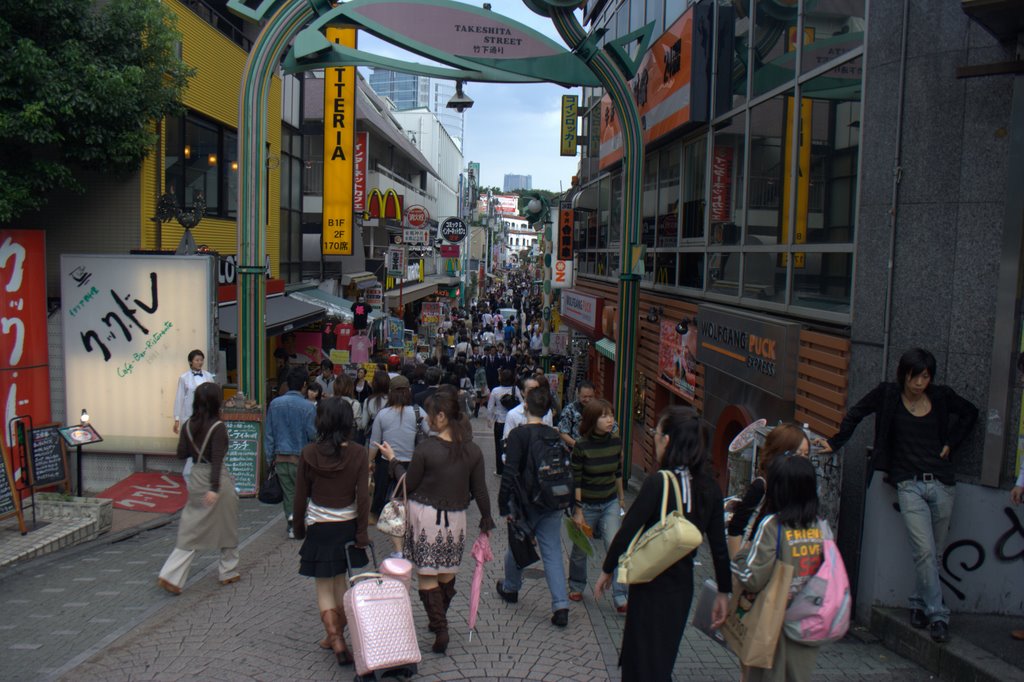
This is Takeshita Street, really the main street in Harajuku. (It's pedestrian-only and there are bigger avenues, but this is the street you walk if you go to Harajuku.) Note the hipster on the right - he thinks he's way cool. Probably thinks he's got the prime spot for attracting the ladies too.

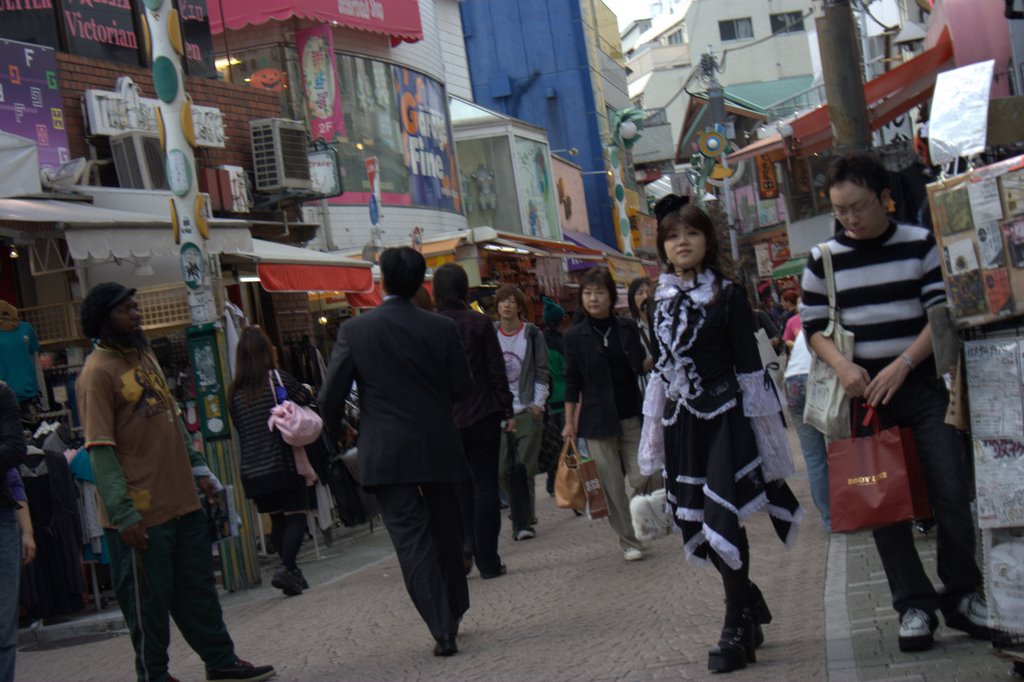
A couple of real Harajuku girls. The fashions worn on regular weekdays are not the outrageous gothic lolita cosplay type stuff you see on Sundays - different groups of people going for different things. On weekdays, Harajuku is the equivalent of New York's East Village, and most of the people you see hanging around like this live in or around the area. This is the way they dress every day of the week.

By the way, Japan as a whole takes its fashion seriously. Harajuku is one aesthetic, but nearly everybody in Japan is absolutely freakin' stylish, whatever style they choose. They really put a lot of effort into it. Coming back to America, it's like this entire country got hit in the head with an ugly stick by comparison.
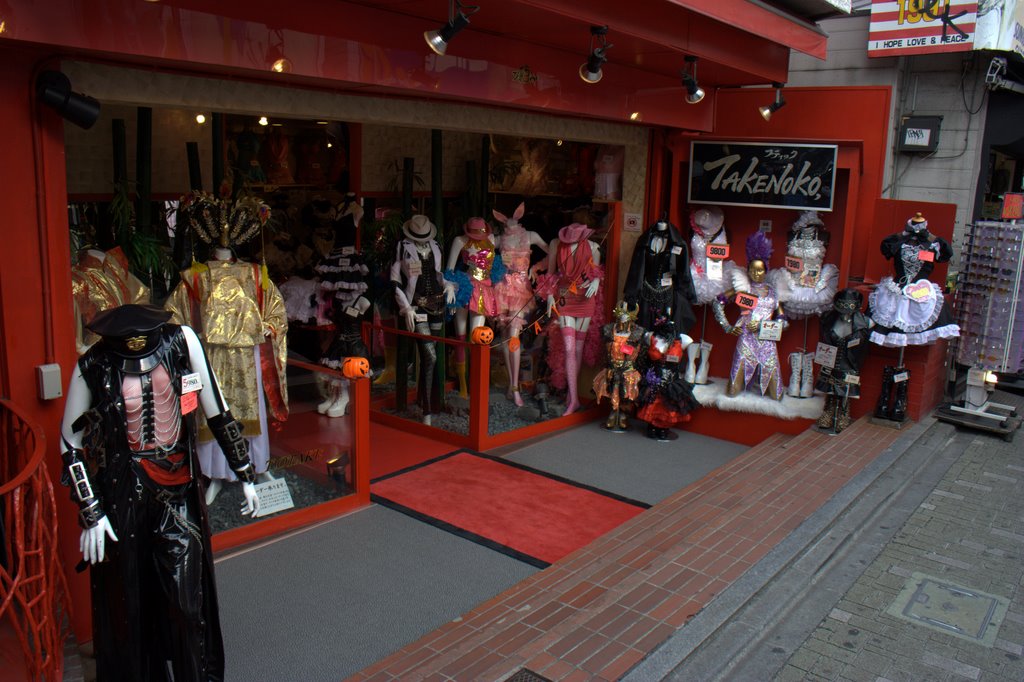
One of the many specialty boutiques on Takeshita Street. Now, I lived in NYC's East Village for a long time (on 1st Ave, one block from the namesake title of this here blog). I've walked down St. Marks Place - the East Village equivalent of Takeshita Street - many times. This stuff is even crazier than anything I saw for sale there. And there are probably 100 stores just like this on Takeshita Street.
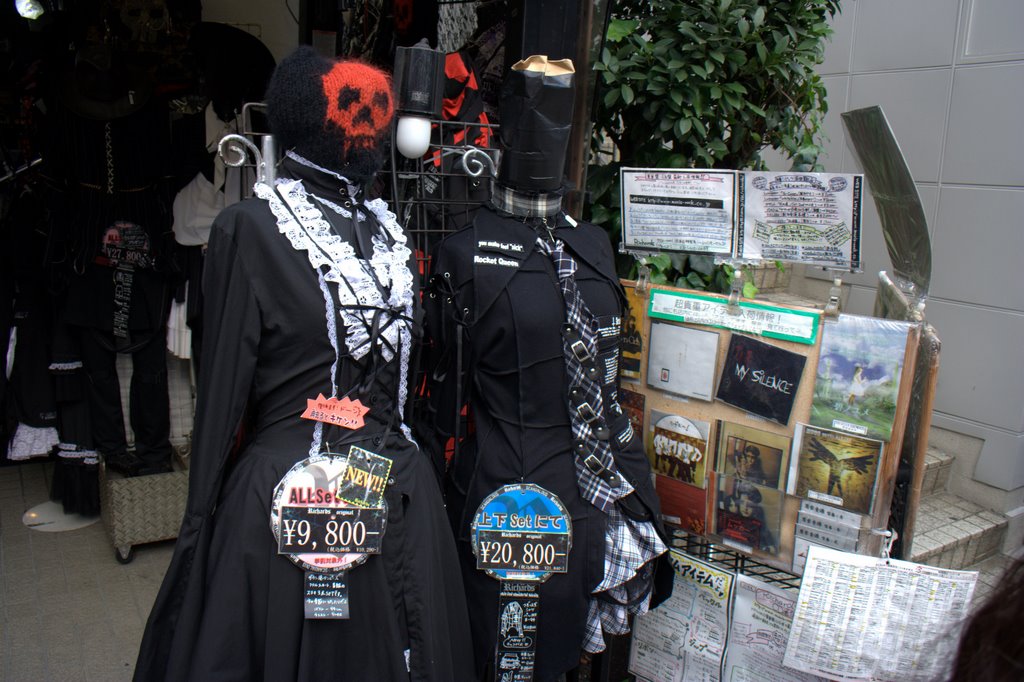
Halloween, Harajuku style. (That skull cap is actually a Halloween decoration - there were a bunch more decorations just out of the shot.) The Japanese don't go trick-or-treating or anything, but they do love to dress up and Halloween was pretty much everywhere there, including and maybe especially in Harajuku.

Now that I've been there, I consider this area pretty much essential for any visit to Tokyo. Tokyo is a city for young people and this is the area that caters to their every whim. It is a microcosm of modern Japanese pop culture, and certainly Japanese street fashion. I'm getting old - I'm in my 30's now - but as a former long-term East Village resident, I totally "get" places like Harajuku, and Harajuku's the East Village times ten. And the fashions are just fun to look at, even if you've got no eye for fashion at all. It's just pure eye candy.

Wednesday, October 25, 2006

Japan - Akihabara, Tokyo


It's known as the gamer's and anime fan's paradise, with seedy adult-oriented underpinnings holding up its glittery neon facade. Akihabara - officially designated "Electric Town", unofficially and affectionately called "Akiba" by those that frequent it. Land of the Famicom, cheap electronics, hentai and maid cafes. Does it really live up to its infamous reputation?

Not really, at least not anymore. But it's still an interesting place.

It used to be moreso, at least for me. The first time I visited Akihabara was in the heyday of the PlayStation, when the Japanese game industry was at its peak and the anime industry was close behind. Nearly every store on Chuo-Dori, Akihabara's main street, was a small shop catering to one niche or another in these mediums - often selling rare and used goods that you couldn't find anywhere else, and for cheap prices. Back then, it really did live up to the reputation it had at the time.

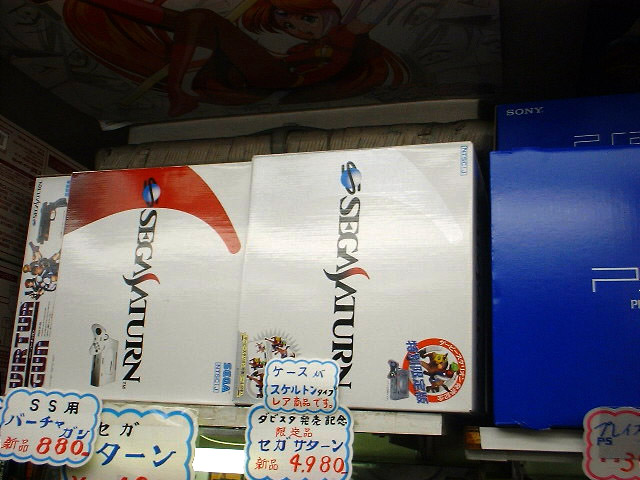
I found my Derby Stallion "skeleton" Saturn there for 4,980 yen in 2000 - this is the rarest Sega Saturn ever made. They were clearin' em out in Akihabara! (I believe that is the exact box I purchased.)

These days, there is a "renewal" of Akihabara going on. What this means I can't quite figure out - usually that's code for sweeping out the seediness and replacing it with family-friendly big-box fare. And to be sure, that is definitely happening in Akihabara, where whole blocks have been torn down to await replacement, and where a giant Yodobashi Camera has opened up directly across from Akihabara station (easily the biggest store in the ward, but with what amounts to a Best Buy/Circuit City ethos, to put it in terms Americans would understand).

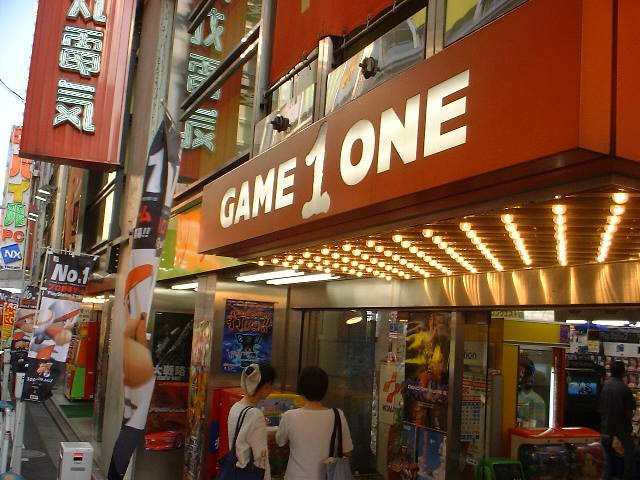
This is Game One - a random store I took a picture of in 2000, one of many like it. Today, most of the stores like this are gone - and I couldn't find Game One (it may still be there and I just missed it, but I remembered this photo so I was looking).

At the same time, though, the curious new phenomenon of the maid cafe has been springing up, apparently in direct defiance of the government's attempts at wiping out the adult-oriented, thoroughly geeked-out theming of the area. You can click that link for a bit more info but the long and short of it is that maid cafes exist to cater to guys with maid fantasies - something that's apparently universal but as in most things gets taken to a weird and completely illogical conclusion in Japan. (The thing is, their costumes are not even what you'd call "sexy" - they're just girls dressed like real maids... save for the occasional bunny ears.)

If you've come here after Googling for an Akihabara map, you're in luck - though I'm not posting it for informational reasons, really, more as an illustration of how creepy the area can still be when it tries. This is an official map of the neighborhood, chock full of maid cafe advertisements (PDF):

My wife and I actually thought it might be fun to try one of these cafes - her idea! We took one of the fliers being handed out by the maids standing outside the train station and headed over to check it out. We were even a little excited to see something so uniquely Japanese geek pop. But I have to admit, when we got to the door and saw that it was the sort of place that sits in a basement with its windows covered up, we chickened out. No doubt that's to protect the identity of its patrons from public shame rather than to hide anything untoward going on inside, but it made us feel a little icky to think we'd even need our identities protected visiting a place like that. Whether or not it's deserved, there's a stigma attached to going to a maid cafe in Japan.

Walking down Chuo-Dori is actually kind of depressing these days, with several blocks just completely gone and more than a few old stores now replaced by coffee chains or other generic shops. Akihabara was never all that big to begin with, but it seems to have shrunk over the years - you can now exhaust pretty much all that it has to offer in about 1/4 mile of Chuo-Dori.

Still, the area around the train station continues to teem with cheap new and used or grey market electronics. There is still a huge Sega game center. There is still a selection of good used anime and game stores, including my favorite, TRADER.

This store is tiny, but it always has things you just never, ever see. This time, I found several new and shrinkwrapped copies of the Nintendo DS Game & Watch collection, the rarest game available for the system and supposedly only available in Japan to Nintendo Club members by collecting a ridiculous amount of "points" from other DS purchases. I wish I'd bought a copy (only 4980 yen), but elected to save my money for other things. Unfortunately, I never found anything else worth buying.

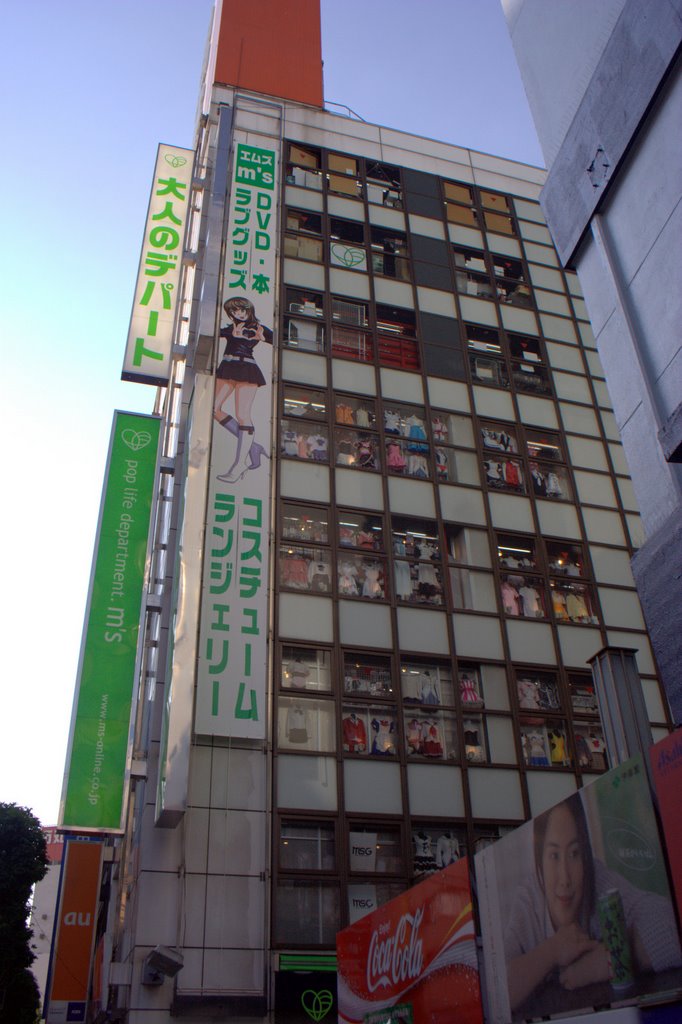
And there are, of course, the stores that may look pretty normal at first glance...

...until you take a closer look:

I guess now we know where the maid cafes get their uniforms.

This was my first visit to Akihabara when I didn't buy a single thing. A big disappointment, especially after my last trip, when I filled an entire duffle bag with Akihabara purchases. My wife thinks I'm getting old and am just no longer as interested in Akihabara's specialties. I don't think that's true - I think it's Akihabara that's changed, and not for the better.

The thing is, there's still a lot of interesting stuff in Akihabara. But Japan is a crazy place, and Akihabara is really no more special than a lot of other areas anymore. Heck, you can buy maid uniforms in Ryugasaki. You can buy used games and anime pretty much anywhere. And big-box stores like Yodobashi Camera are certainly not exclusive. There's no need to go to Akihabara for these things. It used to be that the sheer concentration of niche stores, the sheer number, the massive selection and the cheap prices made Akihabara a special place. But it's lost a lot of what made it unique over just the past six years.

Tuesday, October 24, 2006

Japan - Hotels (and How to Find One)

First-time travelers to Japan may face some daunting choices in where to stay - in many ways it is a completely alien country, and I've met people who think that all the hotels there force you to sleep either on the floor or in tiny capsules. This is obviously not the case, and in fact choosing a decent hotel is not that difficult. But choosing one that's convenient, has all the amenities you want and has a nice view is as challenging as it is anywhere.

In most parts of Japan, and as in many other things, you have two basic choices: Japanese or western style. Japanese style inns, or ryokan, are becoming harder to find and are generally pretty expensive. The Japanese don't use these much anymore unless they're playing tourist themselves, so most hotels you'd find - especially in a modern city like Tokyo (or even Kyoto) are going to be western style. Western bed, western bathroom, all the standard conveniences.

Most westerners seem to stay in the hotels they know from America - Hilton, Hyatt and other major chains exist there too. The problem I have with these chains is that they know they've got the familiarity in their favor so they charge exorbitant rates - generally $300 a night and up.

I've been using Prince Hotels ever since my first stay in Japan - they're sort of the Hilton of Japan; upscale mid-range, popular with business travelers. They're also everywhere - there are seemingly dozens of Prince Hotels in Tokyo. The hotels themselves are western but with a Japanese interpretation - something I always find interesting. The Japanese take on western luxury includes a lot of gold, chrome and glass - it's like being transported back to the 1980's, even in their new buildings.

Prince Hotels are famous for (generally) offering great views. It may not be true of all of their hotels, but it is certainly true of the Shinagawa Prince:


The Shinagawa Prince is almost unbelievable, especially if you've never heard of this chain before. It's mind-boggingly large, and is in fact four hotels in one, plus a major mall and condominium complex. Some visitors to Japan may prefer something a little more traditional; I personally enjoy the total excess that is modern Japanese culture. You want Japan? A gigantic chrome, gold and glass quad-hotel on top of a mall, iMax theater, dual-level bowling alley and condo complex is as much Japan as any ryokan.

I love the Shinagawa Prince because of the view and because of its style. I also love that its rooms are "only" about $150 per night - relatively cheap for "downtown" Tokyo (whatever that means). You can find cheaper, though - as we did a couple trips ago - just by walking down the street. There are a lot of hotels in the larger areas of Tokyo, and all you really need to do is find a smaller one that you can bet probably doesn't deal with a lot of the major travel agencies. If it looks clean, you're probably pretty safe staying there. We found a decent hotel just a block or so from the Shinagawa Prince a few years ago that charged just 9800 yen per night - all it lacked was the view.

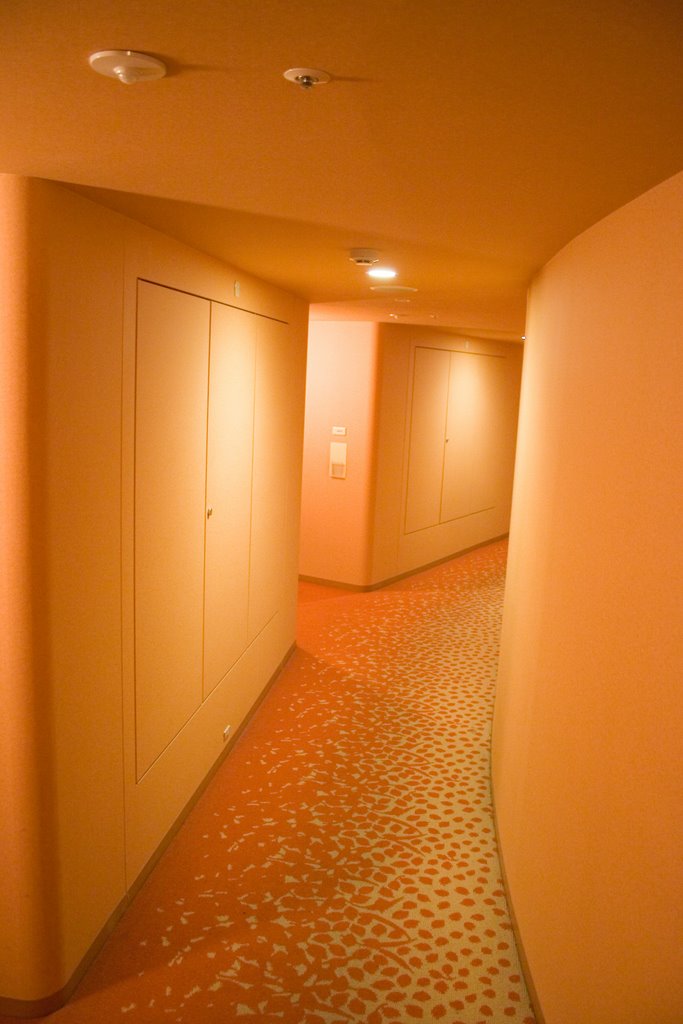
One caveat about the Shinagawa Prince: as it is basically four separate hotels, some are newer than others. The "main" building is actually the oldest, and seems to get rented out by class trips and other large groups that probably just want the cheapest rates. The "annex" is a bit newer and a bit more upscale, but still pretty old. It's probably the quietest building in the complex, though. The "new tower" is no longer the newest tower, but is still not old - and it's got the same views as I'm posting here. The "executive tower" is the newest of all the buildings, just a year or two old - and it probably also has the nicest of the "cheap" rooms at the hotel. That's where we stayed this time - though this tower does have some too-modern oddities, like rock-hard beds and these corridors lifted straight out of the Starship Enterprise:

It also has, of course, one amenity standard to all decent Japanese hotels: an electronically-controlled bidet in every bathroom. Another cool thing about the executive tower: you can get a 1,000 yen gift voucher good at any of the convenience stores in the hotel if you choose not to have your room made up on any given day. (You can't do this two days in a row, but you can every other day.) This basically bought us breakfast and snacks for our entire stay.

One thing you've got to consider when picking a hotel to stay at is what you plan on doing. One semi-annoying thing for us about Shinagawa is that there aren't many tourist spots, so pretty much every day started out with a trip on the Yamanote line. At least the hotel is directly across from the train station - always a plus in Japan. But you may want to look for hotels closer to where you're actually going to go - though in our case, it probably didn't much matter because we went in all different directions every day. As I mentioned in my Tokyo Tower post, Tokyo is spread out all over the place, so there's no one area where all the attractions are concentrated as in a city like New York.

So how did we find the Shinagawa Prince to begin with, not to mention the New Miyako in Kyoto? Well, having a Japanese travel agent doesn't hurt - we've used H.I.S. in the past, and this time we used JALPAK. With JALPAK, though, I actually told them which hotels I wanted - it sure doesn't hurt to check tripadvisor.com for recommendations and reviews. That's how I found the New Miyako.

I've neglected talking about Akihabara so far - one subject I know a lot of you anime and game fans out there are going to want to know about - so I'll do that next. Watch for it (hopefully) tomorrow!

Monday, October 23, 2006

Japan - Tokyo Tower

Our first day in Tokyo began pretty much the same way as our first day in Kyoto - with a visit to the city's designated sightseeing tower. Tokyo Tower may invoke images of the Eiffel Tower but it was built as a radio/television transmission tower first and foremost. Still, it is a beautiful tower and taller than you'd probably think. I'm not sure if it's the tallest structure in Tokyo or not, but it would surprise me if it isn't.

If you're interested in visiting, the easiest way to get to the tower (and the most pleasant) is the Yamanote line to Hamamatsucho station. From there, it's about a 15 minute walk - it's pretty easy to figure out walking directions on your own, just look for the tower and walk towards it.

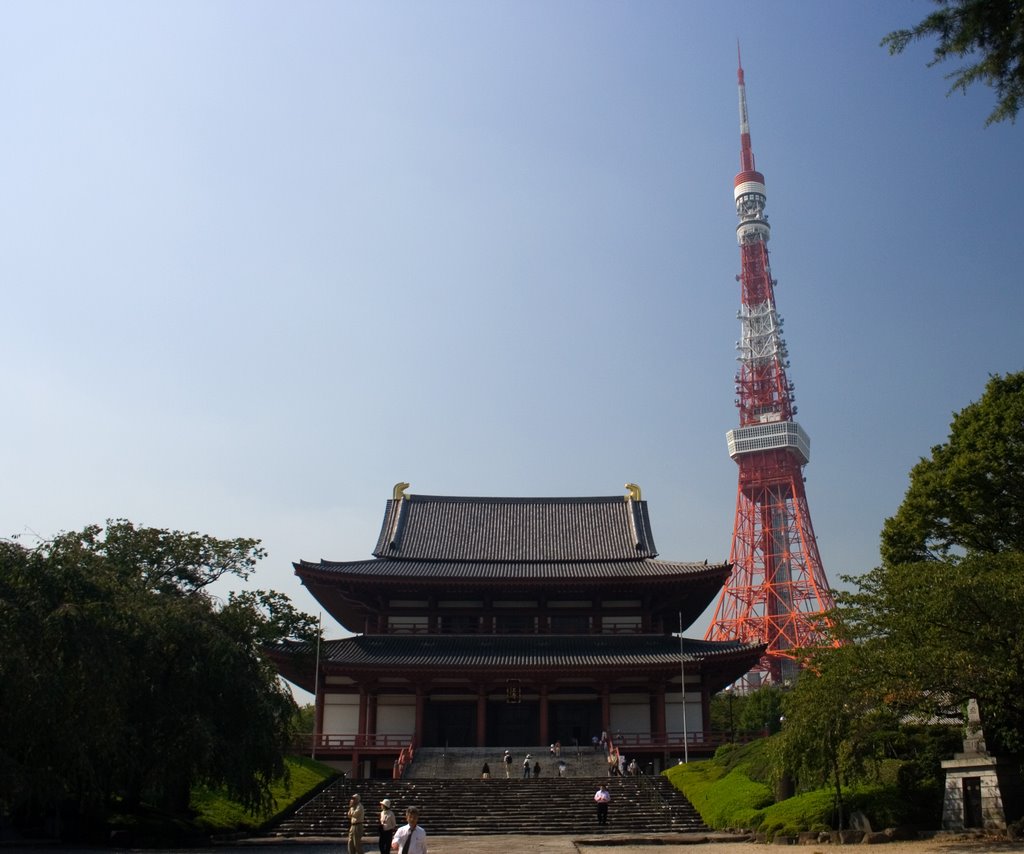
A pleasant surprise for us was stumbling upon Zojoji Temple - we hadn't planned it, but it sits directly in the path from Hamamatsucho station to the tower. Compared to some of the other temples we'd been to on this trip, it's a fairly small complex - still, it was nice to experience some peace and tranquility in the middle of bustling Tokyo. It was also an interesting juxtaposition of new and old architecture that made for some good photo opps.

This kinda brings up a point, which is that the perception of Tokyo (and Japan itself) in the west is a bit skewed. Tokyo is a huge, sprawling city, but it has a lot of quiet areas like this, and it is not particularly crowded - at least to a New Yorker. Obviously, those used to rural areas in any country will be absolutely overwhelmed by Tokyo, but the population density of Manhattan and central Tokyo are pretty similar - and remember that Manhattan has a huge swath of land right in the middle of it devoted to a giant park. The point being, while stories of commuters having to be physically packed into subway trains like sardines abound in the west, Tokyo is really no more crowded than a lot of other cities, and it's got plenty of big open spaces like this.

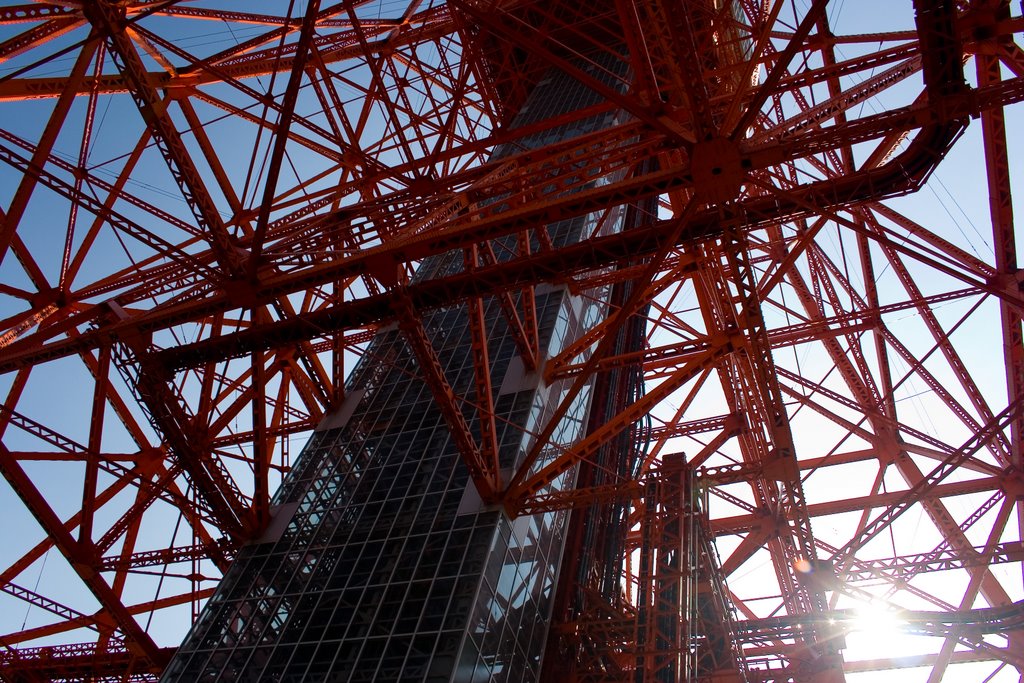
Almost directly beneath the tower. Tokyo Tower is different than Kyoto Tower in that there are a bunch of other attractions inside the tower itself - it's not strictly for sightseeing (and it's not sitting atop a hotel). There is a wax museum, for example, as well as a few other things that we didn't try. It's a whole big building full of attractions, and it looks pretty new inside - so it's a pretty major spot for tourists.

Here's the English version of the Tokyo Tower brochure - I also have (or had) a Japanese version but I may have given it away already. (Multi-page PDF):

Tons of cool stuff in there. Tokyo Tower's a happenin' place.

Obviously, the more you do there, the more you're gonna pay - everything requires its own ticket (even going all the way to the top observation deck requires two separate tickets).

Part of the view from the main observation deck about 1/3 the way up the tower, looking towards Odaiba. You can see Rainbow Bridge towards the right, with Odaiba beyond. It was really smoggy that day (actually this is not that bad for Tokyo) so we didn't bother paying the extra to go up to the "special" observation deck near the top - on some days, though, you can apparently see as far as Osaka, hundreds of miles away.

One of the only knocks I have against Tokyo is that it does not have a particularly compelling skyline. Part of that is the earthquake zoning provisions that make it prohibitively expensive to build tall - 35 stories is a skyscraper in Tokyo. The "sunshine laws" also restrict the amount of shadow a building can cast on the surrounding neighborhood - though these are now being relaxed a bit as the city runs out of land (it's dawned on political leaders that building vertically frees up surrounding land for parks or other uses). Tokyo is also not a city in political terms, which is one reason why you see wildly varying estimates of its population - it depends on what you're counting. But this means that there is no "center" of the city, really. It's just one big sprawl, with a few smaller city "centers" around the edges.

This is the view of Zojoji Temple from above.

And Tokyo Tower from directly below.

Next up: our hotel, getting around Tokyo, the Meiji Shrine and Harajuku!

About This Blog

This is increasingly not a blog about Alphabet City, New York. I used to live in the East Village and work on Avenue B, but I no longer do. Why don't I change the name if I'm writing about Japan and video games and guitars? Because New Yorkers are well-rounded people with varied interests, and mine have gone increasingly off the rails over the years. And I don't feel like changing the name. I do still write about New York City sometimes.

Followers

  © Blogger templates The Professional Template by Ourblogtemplates.com 2008

Back to TOP